
Fat Freezing London
Our fat-freezing machine: Sculpt Pro Cryo Quattro
3D Lipo London currently uses the Sculpt Pro Cryo Quattro for cryolipolysis treatments. We identify the actual system used at our clinic so clients can distinguish our treatment from other branded fat-freezing devices. Suitability, applicator choice and the number of applicators required are assessed for the individual treatment area.
Updated 20 September 2026
What is Fat Freezing?
Fat freezing, also known as cryolipolysis, is a non-surgical body-contouring treatment designed to reduce small, localised pockets of subcutaneous fat — the pinchable fat that sits beneath the skin. Controlled cooling is applied to the treatment area; the affected fat cells are then gradually cleared by the body over the following weeks and months. It is intended for body contouring rather than weight loss and it does not treat visceral fat around the internal organs.
At 3D Lipo London in Marylebone, every treatment begins with a suitability assessment so the area, amount of pinchable fat, skin condition and medical history can be considered before an applicator is selected.
Fat Freezing Prices: Chin £139 | One large applicator £159 | Two large applicators £259 | Three-session packages from £369.
Book or discuss suitability: 07763 566 574 or see our Marylebone clinic contact details.
A £30 booking deposit secures an in-person consultation. It is fully redeemable against treatment and refundable after you attend if you decide not to proceed. Please give at least 72 hours' notice to cancel or reschedule. A no-show loses the £30 deposit, and rebooking after a no-show requires a new £30 deposit.
Who is fat freezing best suited to?
The treatment is generally most suitable for adults who are reasonably close to a stable weight but have a specific pocket of fat that has not responded as they would like to diet and exercise. It is not a treatment for obesity and it should not be presented as a substitute for healthy weight management.
Common areas assessed at the clinic include the abdomen, flanks or love handles, upper arms, back fat, inner thighs and the area beneath the chin. Whether a particular area can be treated depends on the amount and position of pinchable fat and whether an applicator can be placed safely.
Who should not have fat freezing?
Fat freezing is not suitable for everybody. Cold-sensitivity disorders such as cryoglobulinaemia, cold agglutinin disease, paroxysmal cold haemoglobinuria, cold urticaria and Raynaud’s disease/phenomenon require particular caution and can make cryolipolysis unsuitable. Treatment should also be avoided over broken or inflamed skin, areas with poor circulation, or in/near a known hernia or structurally weak abdominal area. Your medical history and medication must therefore be disclosed before treatment.
If there is any uncertainty about a medical condition, previous surgery, implanted material or medication, the clinic may decline treatment or ask for medical clearance. Safety takes priority over proceeding with a cosmetic treatment.
What happens during a treatment?
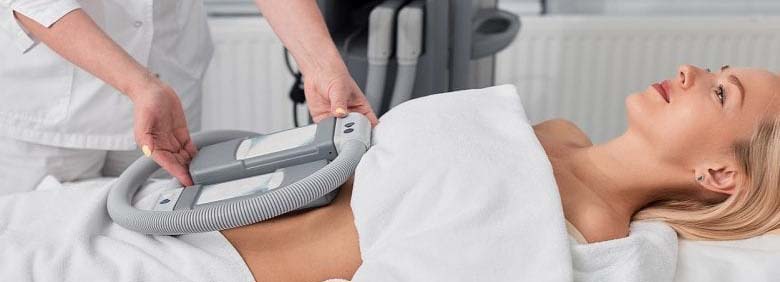
The treatment area is assessed and marked, a protective membrane or gel pad is placed over the skin, and the selected applicator is positioned over the pocket of fat. You may initially feel firm suction, pulling and intense cold; the area usually becomes numb as cooling continues. Treatment time varies by area and applicator, but a typical appointment may involve around 45–60 minutes of device time per treatment area. Afterwards, temporary redness, tenderness, tingling, swelling, bruising or numbness can occur.
When should you expect results?
Fat freezing is gradual. It is normal not to see a meaningful difference immediately after treatment. Changes may start to become noticeable after several weeks, while the final contour can continue to develop for around two to three months. Published clinical literature reports measurable reductions in subcutaneous fat thickness after cryolipolysis, but the amount of change varies considerably between people and between treatment areas.
Some clients are satisfied after one treatment; others choose a second or third session depending on the area and their goal. We recommend assessing the result after the tissue has had time to settle rather than repeatedly treating an area too quickly.
How much does fat freezing cost at 3D Lipo London?
Current clinic prices start from £139 for the chin, £159 for one large applicator and £259 for two large applicators. Three-treatment packages currently start from £369. The number and size of applicators required depends on the area being treated, so the most useful price is confirmed after the treatment area has been assessed. See the current 3D Lipo London price list for the full breakdown.
How many applicators might I need?
Applicator count is based on anatomy rather than a one-price-fits-all approach. A small area such as beneath the chin may use a small applicator, while a lower abdomen, flanks or larger body area may require one or two larger applicators to cover the intended treatment zone. During consultation we explain the proposed placement and cost before treatment begins.

What can fat freezing treat — and what can it not treat?
Cryolipolysis targets subcutaneous fat. It cannot remove visceral fat around the organs, it is not a weight-loss treatment, and it is not primarily a skin-tightening or cellulite treatment. If loose skin or cellulite is the main concern, a different treatment such as radio-frequency skin tightening, cellulite reduction or shockwave therapy may be more appropriate. In some cases a combination plan is more sensible than trying to make one treatment solve every concern.
For more area-specific information, see our guides to abdomen fat freezing, upper-arm fat freezing, double-chin fat freezing, flanks/love handles and inner-thigh treatment.
Possible side effects and rare complications
Temporary redness, bruising, swelling, tenderness, altered sensation or numbness can occur after cryolipolysis. Less commonly, prolonged numbness, nodules, skin injury or nerve-related symptoms can occur. A rare but important complication is paradoxical adipose hyperplasia (PAH), where the treated fatty tissue becomes larger and firmer instead of smaller; it can appear months after treatment and may require surgical correction. This risk should be understood before choosing treatment.
We do not describe fat freezing as risk-free or pain-free. Comfort and side effects vary between people. If you develop severe pain, blistering, unusual colour change, a persistent hard enlargement or another symptom that concerns you after treatment, contact the clinic and seek medical assessment where appropriate.
Is fat freezing FDA approved?
The wording can be confusing. The US Food and Drug Administration has cleared specific prescription-use cryolipolysis devices for particular body areas; this does not mean that every device marketed as “fat freezing” is FDA cleared. For that reason, we avoid making a blanket claim that the cryolipolysis technique itself or every fat-freezing machine is “FDA approved”.
What happens after treatment?
Most people can return to normal day-to-day activities after an appointment, although the treated area may feel tender or numb. Maintain normal hydration, keep to a balanced diet and regular activity, and follow the aftercare advice given for your specific treatment. Fat cells affected by treatment are gradually processed over time; drinking excessive water does not make them disappear instantly, and there is no special detox required.
See our detailed fat freezing aftercare guide and results timeline for more information.
Fat freezing compared with other body-contouring options
Fat freezing uses controlled cooling to reduce a localised fat layer. Ultrasound cavitation uses a different technology and treatment approach, while radio frequency is primarily selected when skin laxity is the main concern. Surgical liposuction can remove substantially more fat but is an invasive surgical procedure with different risks and recovery. The right option depends on whether the main concern is localised fat, loose skin, cellulite, muscle tone or overall weight.

Realistic expectations
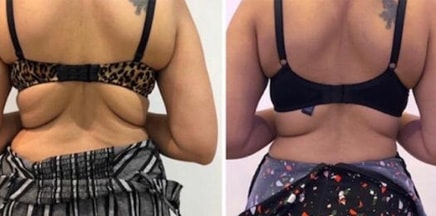
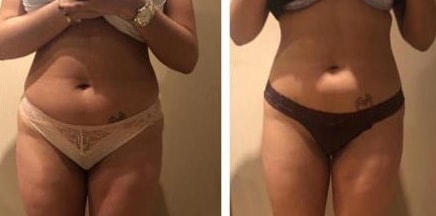
The aim is a measurable but natural-looking reduction in a localised fat bulge, not dramatic whole-body weight loss. Clinical studies have reported average reductions in treated subcutaneous fat thickness, but results vary and no particular centimetre or percentage reduction can be guaranteed to an individual client. Before-and-after photographs should be compared under similar conditions wherever possible.
You can view examples from our clinic on the before and after results page. Results shown are individual outcomes and should not be taken as a promise of what another client will achieve.
Why choose 3D Lipo London?
3D Lipo London is an established non-surgical treatment clinic in Marylebone. We focus on suitability before treatment, explain the proposed applicator placement and cost, and do not treat fat freezing as a substitute for weight loss. The clinic currently has 250 Google reviews, and clients can review prices, before-and-after examples and treatment information before deciding whether to book.
The consultation is also the point to tell us about previous surgery, hernias, circulation problems, cold-sensitive conditions, medication or any other medical history that may affect treatment. If we do not believe treatment is appropriate, we will not proceed.
Fat Freezing FAQs
What should I look for when choosing a fat-freezing clinic in London?
Check which device is actually being used, whether the clinic carries out a proper suitability assessment, whether risks and contraindications are explained, whether pricing is transparent, and whether before-and-after examples are presented realistically. 3D Lipo London identifies the Sculpt Pro Cryo Quattro as its primary fat-freezing system and publishes current prices on Prices page.
Is fat freezing a type of body sculpting?
Yes. Fat freezing is one form of non-surgical body sculpting, specifically aimed at reducing localised pockets of subcutaneous fat. Other body-sculpting technologies target different concerns such as muscle tone, cellulite or skin laxity.
Is one session enough?
It can be for a modest localised pocket, but some areas need more than one session. The sensible approach is to assess the result after the normal response period and decide whether further treatment is worthwhile.
Does fat freezing help you lose weight?
No. Cryolipolysis is a contouring treatment for a localised fat layer. Your body weight may change independently of the cosmetic result.
Can the treated fat come back?
Fat cells affected by treatment are removed over time, but remaining fat cells can enlarge if you gain weight. Maintaining a stable weight helps preserve the contour achieved.
Does it tighten loose skin?
Not reliably. If skin laxity is the main concern, a separate skin-tightening assessment is more appropriate.
Can it treat visceral belly fat?
No. The applicator treats pinchable subcutaneous fat beneath the skin, not visceral fat surrounding internal organs.
Can I have fat freezing after abdominal surgery or a C-section?
Previous surgery does not automatically mean treatment is possible or impossible. Scar position, healing, sensation, abdominal-wall integrity and any history of hernia need to be assessed first. See our fat freezing after C-section guide and disclose all previous procedures during consultation.
Can I exercise afterwards?
Many clients return to normal activity, but comfort varies. If the area is tender or swollen, reduce activity until it feels comfortable and follow the aftercare advice you are given. See our exercise-after-fat-freezing guide.
How long should I wait before judging the result?
Several weeks are usually needed before a change becomes apparent, with the contour continuing to evolve over roughly two to three months. This is why we do not recommend judging the treatment after only a few days.
Explore fat-freezing guides
If you want more detail before booking, choose the guide that matches your question. These links cover treatment areas, prices, results, aftercare, science and comparisons without repeating the same destination several times.
Prices, location and treatment areas
- Fat-freezing prices and packages
- Which areas can be treated?
- Abdomen and stomach fat freezing
- Double-chin fat freezing
- Upper-arm fat freezing
- Love handles and flanks
- Inner-thigh fat freezing
- Back-fat fat freezing
- Fat freezing near Baker Street and Marylebone
How it works, results and aftercare
- Cryolipolysis science and treatment guide
- How cryolipolysis works
- Fat-freezing treatment time
- Does fat freezing really work?
- What to expect after one session
- When will I see results?
- Fat-freezing before and after
- Stomach fat-freezing before and after
- Fat-freezing aftercare and exercise
- Fat freezing after a C-section
- History of cryolipolysis and fat freezing
Comparisons and treatment planning
- Fat freezing vs liposuction
- Cavitation vs fat freezing
- Combining fat freezing and cavitation
- CoolSculpting vs fat freezing
- PowerSculpt vs fat freezing
- Double chin: fat freezing vs RF skin tightening
- Can fat freezing get rid of cellulite?
- Fat freezing vs cellulite treatment
- Planning fat freezing before summer
- Fat freezing and non-surgical body contouring: what they can and cannot do
Independent medical information
For independent background information, see the US FDA overview of non-invasive body contouring and Cleveland Clinic's cryolipolysis guide.
