LED Light Therapy Aftercare & Results Guide
What to do before and after treatment, when results usually show, and how to get the best outcome from your LED course in London. If your main goal is firmer-looking skin, also see our LED collagen guide.
Updated: 19 September 2026
LED Light Therapy Prices & Booking
Current Dermalux prices: Single 20-minute session £75 · 3 sessions £199 · 6 sessions £349 · course of 12 £659. These figures come directly from our current prices page.
A £30 booking deposit secures an in-person consultation. The deposit is fully redeemable against treatment and is refundable if you attend and decide not to proceed. Please give at least 72 hours’ notice to cancel or reschedule. A no-show loses the £30 deposit and rebooking after a no-show requires a new £30 deposit. If you arrive late, the appointment may need to be shortened so later bookings are not delayed.
View the main LED Light Therapy London page or call 07763 566 574.
This practical guide is for clients who want to know what to expect around treatment day — including preparation, aftercare, when results may appear, and how often to book sessions. If you are ready to book a session, visit our LED Light Therapy London page. If you want the full science and wavelength overview, see our LED Light Therapy Guide.
On this page
Before your LED appointment
LED light therapy is straightforward and usually requires very little preparation, but a few simple steps can help you get the most from your session. Arrive with clean skin where possible (especially if you are booking LED as a standalone treatment), and tell us about any recent changes to your skincare routine or medication.
- Tell us about active products: retinoids, strong exfoliating acids and prescription creams can increase sensitivity in some people.
- Let us know about any recent treatments: peels, microneedling, laser or intense exfoliation may affect timing.
- Mention photosensitivity: if you have a condition or medication that increases light sensitivity, we need to assess suitability first.
- Keep expectations realistic: LED is usually a course-based treatment, not a one-off miracle treatment.
If you’re unsure whether LED is the right starting point, our LED Light Therapy Guide explains which wavelengths are commonly used for acne, redness and skin rejuvenation.
What happens on the day
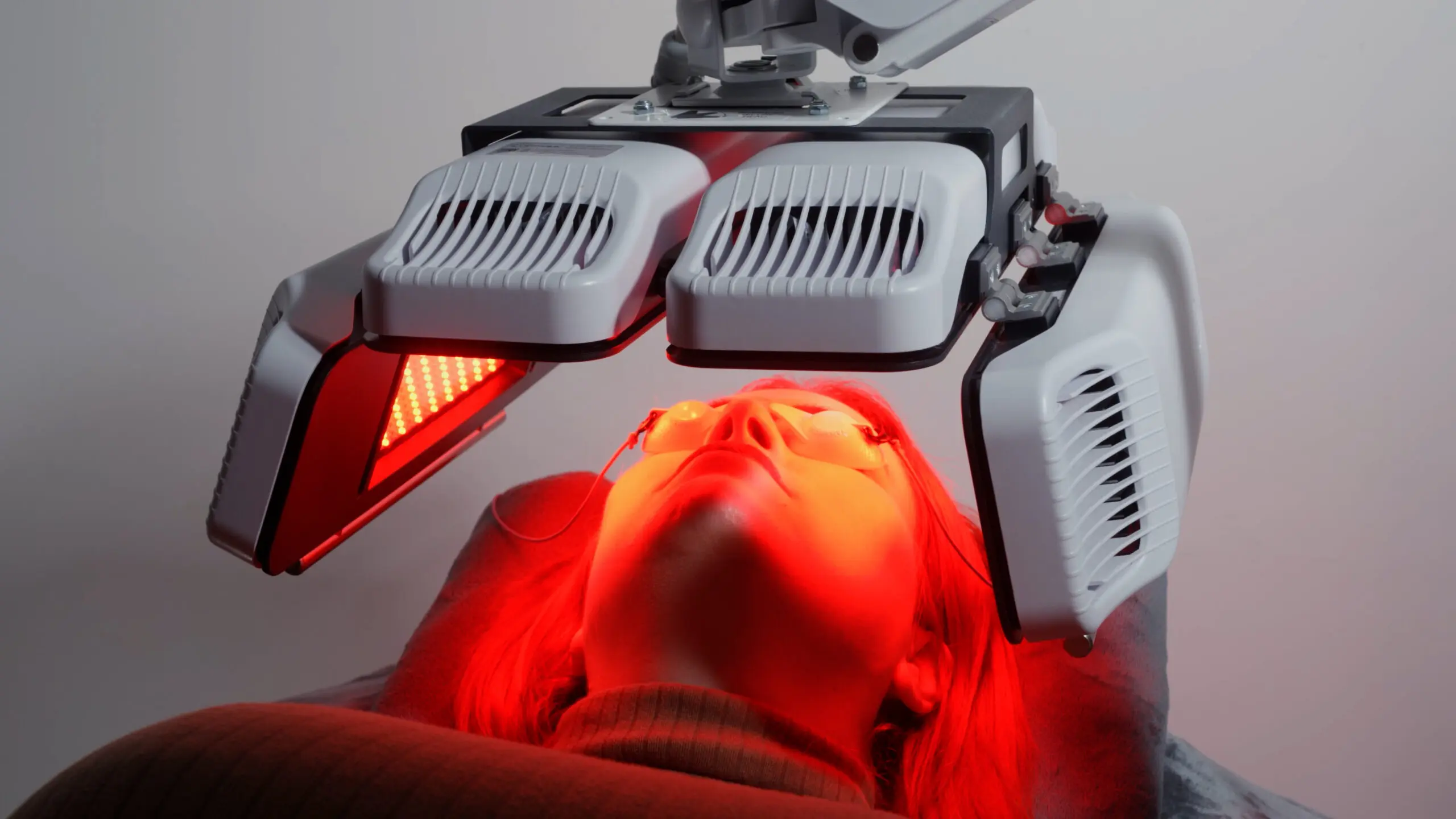
At the clinic we check your goals, review any contraindications, and choose the most appropriate protocol. For many clients, the treatment itself feels warm and relaxing. You will wear eye protection and the panel is positioned at the correct distance for the selected programme.
Most appointments are quick, making LED a convenient “lunch break” treatment. If LED is combined with another treatment (for example a facial), the total appointment time will be longer.
LED aftercare (same day + 24 hours)
One of the main reasons people choose LED is that it generally requires little or no recovery time. Many clients return to normal activities straight away, although temporary warmth, mild flushing or sensitivity can occur. Good aftercare helps your skin stay comfortable and supports the best cosmetic outcome.
Same day aftercare
- Use gentle skincare and avoid introducing new active products on the same day.
- SPF is still essential, especially if you also use acids or retinoids in your routine.
- Avoid unnecessary irritation such as aggressive exfoliation or scrubbing.
- Hydrate the skin with a simple moisturiser if your skin feels dry or warm.
First 24 hours
- Keep your routine simple and barrier-friendly.
- If you are prone to flushing, avoid very hot steam/sauna for the rest of the day.
- Follow any additional advice given if LED was combined with another treatment.
For treatment pricing and package options, see our prices page or the main LED treatment page.
LED results timeline
LED results vary by skin concern, the wavelength used, and consistency. Some clients notice a visible “glow” or calmer-looking skin after one session, but most meaningful improvements build over several appointments.
Typical pattern (general guide)
- After 1 session: skin may look fresher, brighter, and calmer.
- After 2–4 sessions: clients often report more even-looking tone and a steadier glow.
- After 4–8 sessions: more noticeable cumulative improvements in texture, clarity or redness support may appear.
- Maintenance phase: monthly or occasional top-up sessions help maintain results.
Results are usually strongest when LED is done as a course and supported by a consistent home routine.
How Many LED Sessions Should You Book?
Our current Prices page offers a single 20-minute session, 3 sessions, 6 sessions and a course of 12. These are booking options, not promises that a particular concern will resolve after a particular package.
The practitioner should recommend course length and frequency after considering your skin concern, relevant medical history, medication/photosensitivity risks, response to treatment and budget.
Common mistakes that reduce results
- Stopping after one session and expecting long-term change.
- Inconsistent bookings (long gaps between treatments can slow progress).
- Overusing harsh skincare while trying to “speed up” results.
- Ignoring SPF when targeting tone and skin clarity.
- Choosing the wrong treatment goal — LED can support many concerns, but some issues need combination treatment.
If you’re unsure what LED can realistically improve, compare this page with our full LED Light Therapy Guide and then book a consultation via contact us.
Can LED be combined with other treatments?
Yes — LED is commonly combined with facials and skin treatments because it is gentle and can complement recovery. At 3D Lipo London it is often booked alongside our 3D HydrO2 Facial or used with selected skin rejuvenation plans. We’ll advise timing and aftercare based on the exact combination.
If your main goal is booking a treatment package, please use our LED Light Therapy London service page. If your main goal is understanding wavelengths and treatment science, use our LED Light Therapy Guide.
LED aftercare and results FAQs
Quick answers before you book
Can I wear makeup after LED light therapy?
Usually yes. Many clients return to normal activities straight away. If your skin feels sensitive, keep skincare and makeup simple and focus on hydration + SPF.
Is there downtime after LED?
LED does not usually require recovery time. Some people may notice temporary warmth, mild flushing or sensitivity that settles quickly.
How quickly will I see results?
Some clients notice glow after one session, but visible improvements usually build over a course of treatments. Consistency matters.
How often should I book LED sessions?
Many clients start with 1–2 sessions per week for several weeks, then move to maintenance sessions. Your ideal frequency depends on your skin goals.
Can LED be combined with facials?
Yes. LED is often paired with facials and other skin treatments. We tailor timing and aftercare based on your plan.
Clinic details (NAP)
3D Lipo London – Marylebone
Name: 3D Lipo London
Address: 82 York Street, Marylebone, London W1H 1QP
Phone: 07763 566 574
Email: info@3dlipolondon.com
Book: Contact us or view prices.
Related pages: LED Light Therapy London (booking + pricing) and LED Light Therapy Guide (how it works + wavelengths).
Dermalux Tri-Wave MD: verified device details
The Tri-Wave MD documentation specifies Blue 415nm, Red 633nm and Near Infrared 830nm. Dermalux publishes a clinical-evidence library covering acne, redness and skin-rejuvenation applications.
Dermalux wavelength science · Dermalux clinical studies
Those sources describe the technology and evidence base; individual results and suitability still vary.
Ready to Transform Your Skin?
Book your LED consultation today and discover how our advanced Dermalux Tri-Wave MD treatments can help you achieve clearer, healthier, more radiant skin.
📍 82 York Street, Marylebone, London W1H 1QP
📞 07763 566 574
✉️ info@3dlipolondon.com
Opening Hours:
Monday - Saturday: 9:00 AM - 7:00 PM
Sunday: Closed
Serving clients from Marylebone, Baker Street, Mayfair, Fitzrovia, Paddington, Westminster, Kensington, Chelsea, and throughout Central London.
LED treatment should match the skin concern
LED phototherapy uses selected wavelengths of light and is non-invasive. The wavelength and treatment plan should match the client’s skin concern, and suitability should be reviewed before treatment rather than assuming every setting is appropriate for every person.
See LED Light Therapy London for the clinic’s Dermalux treatment information, and aftercare and results timing for practical guidance.