LED Light Therapy Guide
Red light, blue light and near‑infrared explained — benefits, results timeline, and how to choose the right course in London.
Updated: 19 September 2026
LED Light Therapy Prices & Booking
Current Dermalux prices: Single 20-minute session £75 · 3 sessions £199 · 6 sessions £349 · course of 12 £659. These figures come directly from our current prices page.
A £30 booking deposit secures an in-person consultation. The deposit is fully redeemable against treatment and is refundable if you attend and decide not to proceed. Please give at least 72 hours’ notice to cancel or reschedule. A no-show loses the £30 deposit and rebooking after a no-show requires a new £30 deposit. If you arrive late, the appointment may need to be shortened so later bookings are not delayed.
View the main LED Light Therapy London page or call 07763 566 574.
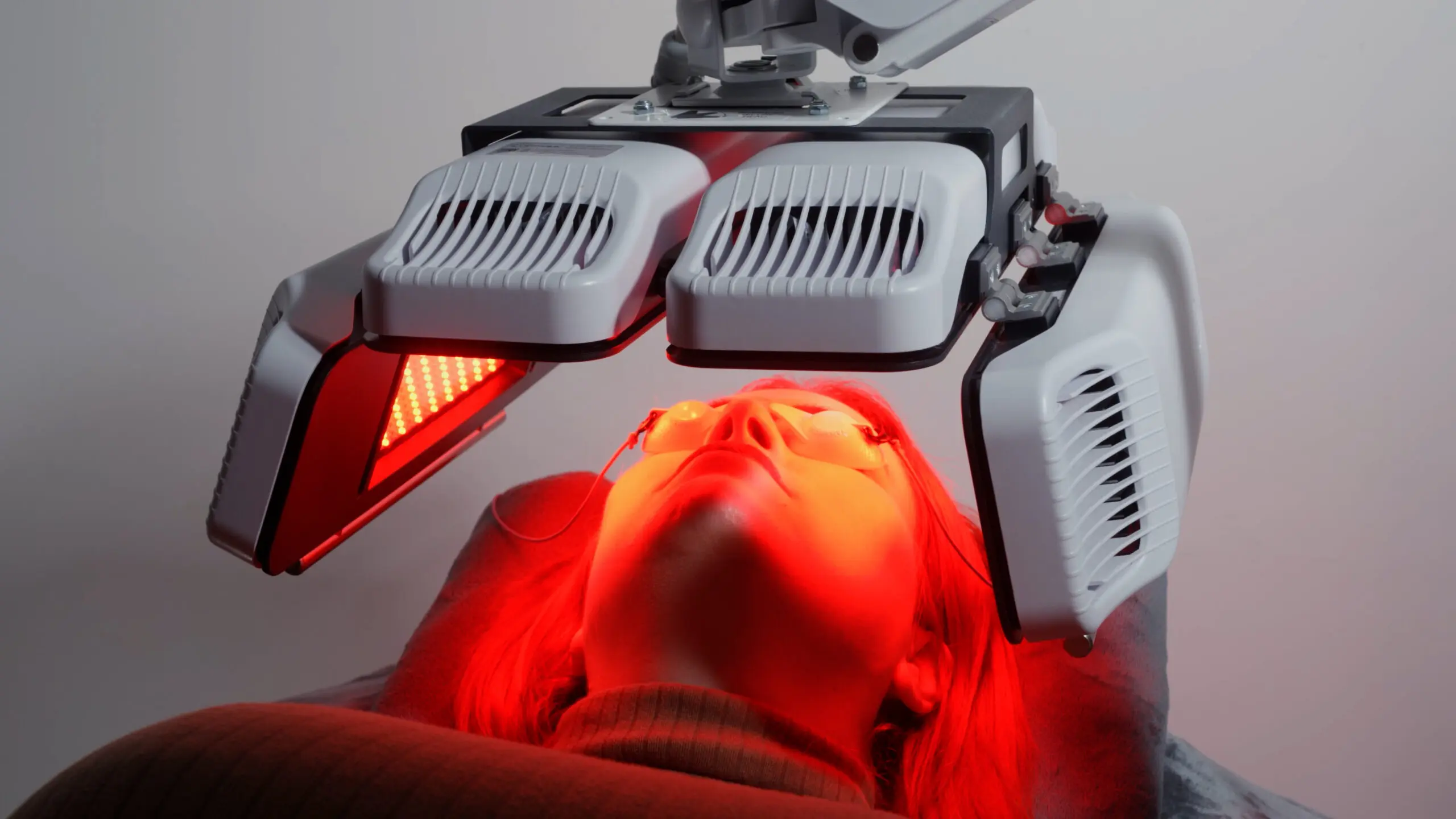
LED light therapy (also called phototherapy) uses targeted wavelengths to support clearer‑looking, calmer skin and healthier‑looking tone. In our Marylebone clinic we use a medical‑grade system (Dermalux Tri‑Wave MD) so you get consistent energy delivery, professional protocols, and safe guidance.
If you want to book, see our LED Light Therapy London page for prices and appointment options, or contact us for a consultation. For practical prep and recovery tips, read our LED aftercare and results timeline guide.
On this page
- How LED light therapy works
- Red light therapy benefits
- Blue light therapy for acne
- Near‑infrared (NIR) light
- Results timeline and how many sessions
- Who it's suitable for
- LED aftercare and what to avoid
- What to expect at your appointment
- Our device: Dermalux Tri‑Wave MD
- Combining LED with other treatments
- Does LED light therapy really work?
- LED light therapy cost in London
- FAQs
- Aftercare & results guide
- Clinic details (NAP)
- Does LED light therapy build collagen?
How LED light therapy works
LED light therapy (also called photobiomodulation) uses specific wavelengths of light to support your skin’s natural renewal processes. Unlike lasers or IPL, LEDs don’t heat or damage the skin. Instead, the light is absorbed by cells in the skin where it can help support healthier-looking function over time.
In clinic, we select a wavelength (or combination) based on your goal — for example, blue light for breakouts, red light for collagen support, and near‑infrared (NIR) for deeper comfort and recovery support. A typical session feels warm and relaxing. Most people read or switch off while the device runs.
Medical‑grade vs home LED masks
Home and clinic LED devices vary widely in wavelength accuracy, irradiance, coverage and treatment controls. The Dermalux Tri-Wave MD is a professional Class IIa medical device with selectable 415nm, 633nm and 830nm wavelengths. A clinic appointment also adds screening and protocol selection; a home mask should be judged on its own specifications rather than assumed to be equivalent.
Red light therapy benefits
Red light is commonly used when the goal is to support smoother-looking skin, bounce and glow. It’s often chosen for:
- Fine lines and texture support (when used as a course)
- Post‑treatment calming after facials and gentle peels
- Dry, stressed or reactive skin (comfort support)
Because red light is non-invasive and gentle, it is popular with people who want little or no recovery time. Many clients return to their day straight away, although temporary warmth, flushing or sensitivity can occur.
Blue light therapy for acne
Blue light is best known for supporting clearer-looking skin. It can help reduce the appearance of breakouts by targeting acne-causing bacteria on the skin’s surface.
Blue light sessions are usually short and can be combined with red light in the same appointment to support comfort and recovery. For clients who struggle with recurring breakouts, a structured course plus sensible homecare tends to give the most consistent results.
Tip: if breakouts are hormonal or very inflamed, LED can still help the appearance of the skin, but it may work best as part of a broader plan (routine, barrier repair, and sometimes medical advice from your GP or dermatologist).
Near‑infrared (NIR) light therapy
Near‑infrared (NIR) wavelengths penetrate deeper than visible red light. In clinic, NIR is often used to support a “recovery” style session — particularly if your skin feels sensitive, compromised or stressed. Many clients also enjoy NIR for general comfort support (for example, after travel, stress, or intense training).
NIR is commonly combined with red light in medical‑grade protocols because the two can complement each other: red for surface glow and texture support, and NIR for deeper comfort.
Results timeline and how many sessions you need
LED light therapy works best as a course. Some people notice their skin looks calmer and brighter after a single session, but for meaningful, lasting improvement you typically need repeated sessions over several weeks.
Typical course examples
Our price page offers a single 20-minute session plus 3-, 6- and 12-session options. Which option makes sense depends on the concern, response and practitioner advice; the package size is not a guarantee of a particular result.
Maintenance is optional and should be based on how your skin responds and what you are trying to maintain; there is no fixed top-up interval that suits everyone.
Who LED light therapy is suitable for
LED light therapy is suitable for many skin types and tones because it does not rely on melanin targeting. It is often chosen by people who want a gentle treatment with minimal interruption to normal activities, subject to individual suitability and response.
You may be a good candidate if you want to support:
- Clearer-looking skin and fewer breakouts
- More even-looking tone
- Fine lines and a healthier-looking glow
- Comfort for stressed, dry or reactive skin
When to avoid or delay: we’ll advise you if you’re taking medications that cause photosensitivity, have certain medical conditions, or if your skin is currently sunburnt or severely irritated. If you’re under medical care for a skin condition, we’re happy to coordinate around your plan — LED can be supportive, but it isn’t a medical treatment.
LED aftercare and what to avoid
LED generally requires little or no recovery time, but temporary warmth, flushing or sensitivity can occur. We still recommend a few simple rules to keep the skin comfortable after treatment:
- SPF daily (especially if you’re also using acids/retinoids)
- Skip harsh actives for 24 hours if your skin feels sensitive
- Avoid heavy heat (very hot sauna/steam) for the rest of the day if you flush easily
- Hydrate and support your barrier with a gentle moisturiser
If you’re combining LED with another treatment (for example, a facial), we’ll tailor aftercare to your skin and exactly what we did that day.
What to expect at your appointment
Your appointment starts with a quick skin check and a few questions about your goals, routine and any products that might increase sensitivity (for example strong retinoids or certain prescription medications). We then cleanse the skin (or prepare the area) so the light can work without interference.
During treatment you’ll wear protective eyewear. The device is positioned at a set distance and runs a timed programme. You may feel gentle warmth, but it should not be painful. After the session we can apply a simple barrier-supporting moisturiser and SPF if you’re heading out.
Many clients combine LED with a facial, because LED can help calm the skin after extractions and support a more comfortable finish.
Our device: Dermalux Tri‑Wave MD
At 3D Lipo London we use the Dermalux Tri‑Wave MD medical-grade system. That means we can select clinically used wavelengths (red, blue and near‑infrared) and tailor the protocol to your goal — from breakout support to glow and comfort sessions.
Medical-grade LED is all about consistency: correct wavelength accuracy, stable output, and repeatable results over a course. We track your progress and adjust the protocol if your skin’s needs change across the weeks.
Can LED be combined with other treatments?
Yes — LED is one of the most “mix-and-match” treatments in aesthetics. It’s commonly paired with:
- HydrO2 facials for hydration and glow
- Gentle exfoliation or skin polishing (where appropriate)
- Body treatments such as skin tightening or wood therapy (LED is usually used for the face, but protocols can support other areas too)
If you’re doing more active skin treatments (like stronger peels), we’ll advise the best timing. Often LED is used immediately after to help the skin feel calmer.
Does LED light therapy really work?
LED light therapy has been widely adopted in professional settings because it’s gentle and can be repeated regularly. Results depend on consistent dosing and choosing the right wavelength for your goal. That’s why we recommend a course and why professional protocols provide controlled, repeatable settings and practitioner screening.
It’s also worth setting expectations: LED supports improvement, but it’s not a substitute for medical care. If you have a diagnosed skin condition, LED may help the skin look calmer, but ongoing management should be guided by a medical professional.
How much does LED light therapy cost in London?
At 3D Lipo London, the current LED prices are Single 20-minute session £75 · 3 sessions £199 · 6 sessions £349 · course of 12 £659. These come directly from our prices page. A £30 booking deposit secures an in-person consultation. The deposit is fully redeemable against treatment and is refundable if you attend and decide not to proceed. Please give at least 72 hours’ notice to cancel or reschedule. A no-show loses the £30 deposit and rebooking after a no-show requires a new £30 deposit. If you arrive late, the appointment may need to be shortened so later bookings are not delayed.
For many clients, the “best value” approach is to book a course for the first 4–8 weeks, then move to monthly maintenance sessions.
Frequently Asked Questions About LED Light Therapy
Everything you need to know before booking
What is LED light therapy?
LED light therapy is a non-invasive treatment that uses specific wavelengths (such as red, blue and near‑infrared) to support healthier-looking skin. It’s gentle, comfortable, and designed to be used in a course for best results.
Does LED light therapy help acne?
Blue light is commonly used to support clearer-looking skin by helping reduce acne-causing bacteria on the surface. Many clients choose a course of sessions, sometimes combined with red light for comfort.
How long does a session take?
Most LED sessions take around 20 minutes once you’re set up. If we’re combining LED with another treatment (such as a facial), your appointment may be longer.
How many sessions do I need?
LED can be booked as a single session or as a course. Our price page lists 3-, 6- and 12-session options. Frequency should be set around the skin concern and practitioner guidance rather than a fixed schedule.
Is LED light therapy safe for all skin tones?
LED light therapy is generally suitable for all skin tones because it does not target pigment or rely on heat. We still complete a quick consultation to ensure it’s appropriate for you.
Can I wear makeup after LED?
Usually yes. Many clients return straight to work. If your skin is feeling extra sensitive, we may suggest keeping it simple for the rest of the day and focusing on hydration + SPF.
Is there any downtime?
LED does not usually require recovery time. Some clients notice mild warmth, temporary flushing or sensitivity that settles quickly.
What’s the difference between medical‑grade LED and a home mask?
Medical‑grade devices are designed for consistent power output, accurate wavelengths and full coverage. Home masks can be useful for maintenance, but clinic treatments often deliver more reliable results — especially when you follow a structured course.
Clinic details (NAP)
3D Lipo London – Marylebone
Name: 3D Lipo London
Address: 82 York Street, Marylebone, London W1H 1QP
Phone: 07763 566 574
Email: info@3dlipolondon.com
Book: Contact us or view prices.
Next step: ready to book? Visit our LED Light Therapy London page for packages, availability and what to expect on the day.
Dermalux Tri-Wave MD: verified device details
The Tri-Wave MD documentation specifies Blue 415nm, Red 633nm and Near Infrared 830nm. Dermalux publishes a clinical-evidence library covering acne, redness and skin-rejuvenation applications.
Dermalux wavelength science · Dermalux clinical studies
Those sources describe the technology and evidence base; individual results and suitability still vary.
Ready to Transform Your Skin?
Book your LED consultation today and discover how our advanced Dermalux Tri-Wave MD treatments can help you achieve clearer, healthier, more radiant skin.
📍 82 York Street, Marylebone, London W1H 1QP
📞 07763 566 574
✉️ info@3dlipolondon.com
Opening Hours:
Monday - Saturday: 9:00 AM - 7:00 PM
Sunday: Closed
Serving clients from Marylebone, Baker Street, Mayfair, Fitzrovia, Paddington, Westminster, Kensington, Chelsea, and throughout Central London.
LED treatment should match the skin concern
LED phototherapy uses selected wavelengths of light and is non-invasive. The wavelength and treatment plan should match the client’s skin concern, and suitability should be reviewed before treatment rather than assuming every setting is appropriate for every person.
See LED Light Therapy London for the clinic’s Dermalux treatment information, and aftercare and results timing for practical guidance.