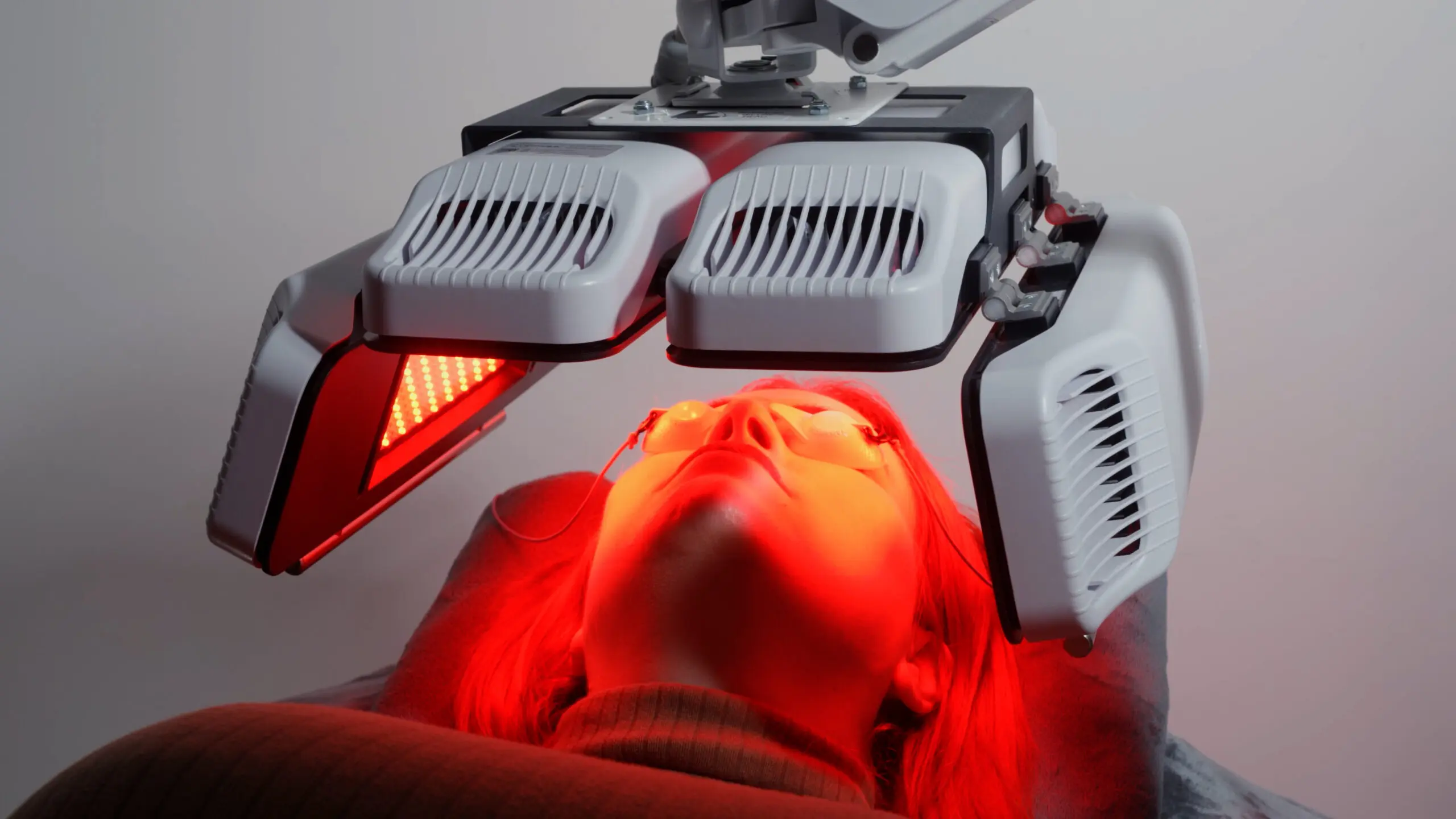
Does LED Light Therapy Build Collagen?
How red light and near‑infrared LED therapy support firmer, healthier-looking skin — with Dermalux Tri‑Wave MD in Marylebone, London.
Updated: 19 September 2026
LED Light Therapy Prices & Booking
Current Dermalux prices: Single 20-minute session £75 · 3 sessions £199 · 6 sessions £349 · course of 12 £659. These figures come directly from our current prices page.
A £30 booking deposit secures an in-person consultation. The deposit is fully redeemable against treatment and is refundable if you attend and decide not to proceed. Please give at least 72 hours’ notice to cancel or reschedule. A no-show loses the £30 deposit and rebooking after a no-show requires a new £30 deposit. If you arrive late, the appointment may need to be shortened so later bookings are not delayed.
View the main LED Light Therapy London page or call 07763 566 574.
LED light therapy is often described as a collagen-boosting treatment, but the most accurate way to explain it is this: LED does not “inject” or physically add collagen into your skin. Instead, professional wavelengths such as red light and near‑infrared light are used to support your skin’s natural repair processes, which may help the skin look firmer, smoother and more radiant over a course of treatments.
At 3D Lipo London in Marylebone, we use Dermalux Tri‑Wave MD, a professional LED phototherapy system. This article connects with our complete LED light therapy guide, our aftercare and results timeline, and our main LED Light Therapy London treatment page.
On this page
What does collagen do for the skin?
Collagen is one of the key structural proteins that helps skin look firm, plump and resilient. As collagen levels naturally reduce with age, lifestyle, stress, sun exposure and environmental damage, the skin can begin to look thinner, less elastic and less smooth. This is why many anti-ageing treatments focus on supporting collagen renewal rather than simply treating the surface of the skin.
LED light therapy is popular because it is gentle, non-invasive and does not create controlled injury in the same way as some stronger resurfacing treatments. For clients who want a gradual improvement in glow, tone, redness and fine lines with little or no recovery time for most people, LED can be a useful part of a skin maintenance plan. Temporary warmth, flushing or sensitivity can still occur.
How LED light therapy supports collagen
Professional LED phototherapy uses specific wavelengths of light. These wavelengths are selected because they interact with the skin at different depths. For collagen-focused treatments, red light and near‑infrared light are especially important because they are associated with skin repair, cellular energy support and improved-looking skin quality.
The treatment is not a quick filler-style change. It is more gradual. The aim is to create the right conditions for the skin to function better over time. That is why results are normally assessed after a course, not just after one appointment.
🔴 Red Light
Best for: collagen support, glow, fine lines, skin rejuvenation and healthier-looking tone.
🟡 Near‑Infrared
Best for: deeper skin repair support, post-treatment recovery and calming inflammation.
🔵 Blue Light
Best for: blemish-prone and oily skin. Blue light is normally used more for acne support than collagen.
Why red light therapy is linked with collagen
Evidence note: Dermalux summarises clinical studies using red and near-infrared LED for skin rejuvenation, including reported improvements in wrinkles, elasticity and collagen-related measures. This supports the biological rationale, but it does not guarantee the same degree of change for every client.
Red light therapy is the wavelength most people associate with anti-ageing LED treatments. It is commonly used for dullness, fine lines, rough texture and loss of radiance. Red LED light can be used as a standalone treatment or as part of a wider facial plan where the aim is to support a smoother, fresher and more even complexion.
For clients searching for red light therapy in London, the key difference is often the quality of the device, the treatment protocol and the consistency of appointments. A professional clinic device such as Dermalux Tri‑Wave MD gives full-face coverage and controlled protocols, which can be harder to replicate with small home LED masks.
Near‑infrared light and deeper skin repair
Near‑infrared light is often used alongside red light because it can support deeper repair processes. At 3D Lipo London, treatment settings are selected around your skin goals. For example, a client focused on collagen, firmness and post-treatment recovery may be treated differently from a client whose main concern is active acne or oiliness.
Near‑infrared light is also one reason LED is often chosen after certain aesthetic treatments. It can help calm the look of stressed skin and support a healthier-looking recovery period, depending on the treatment performed and your suitability.
When will you see collagen results from LED?
Many clients notice an immediate glow after LED, but collagen-focused changes are usually slower. Skin repair and firmness improvements build gradually. Some people notice the skin looking brighter and calmer after the first few sessions, while more visible changes in texture and fine lines are usually judged after several weeks.
After 1 session
Skin may look calmer, fresher and more radiant, especially if it was dull or tired.
Over a course of treatment
Clients may start noticing more consistent glow, smoother-looking texture and better skin comfort.
With continued treatment
This is where collagen-focused courses are usually assessed, especially for firmness, fine lines and overall rejuvenation.
Maintenance
Maintenance sessions can help keep results going, especially alongside good skincare and daily SPF.
For a more detailed breakdown, see our LED results timeline and aftercare guide.
How many LED sessions are recommended for collagen?
For collagen support and anti-ageing, a course is normally better than a one-off session. A single treatment can be useful before an event for glow, but collagen support is a cumulative process. Our price page includes 6- and 12-session options for clients who want a course; suitability and response determine the most appropriate plan.
You can view our current treatment options on the LED Light Therapy London pricing section, or visit our full prices page.
Can LED be combined with other collagen treatments?
Yes. LED light therapy can work very well as part of a wider skin plan. It may be combined with treatments such as a 3D HydrO2 Facial, professional facials or RF skin tightening, depending on your skin condition and treatment goals.
Combination treatment plans should always be personalised. For example, someone with sensitive or redness-prone skin may need a calmer approach, while someone focused mainly on firmness and ageing may benefit from a different schedule.
Who is LED collagen therapy suitable for?
LED light therapy is suitable for many skin types and is often chosen by clients who want a gentle, generally well tolerated treatment that does not usually require recovery time. Temporary warmth, flushing or sensitivity can still occur. It can be useful for dullness, early fine lines, tired-looking skin, redness, post-treatment recovery and general skin maintenance.
However, suitability still matters. During consultation, we check relevant medical history, medications and any potential photosensitivity risks. This is especially important for light-based treatments.
LED collagen therapy at 3D Lipo London
Clinic: 3D Lipo London, 82 York Street, Marylebone, London W1H 1QP
Device: Dermalux Tri‑Wave MD professional LED phototherapy
Popular goals: collagen support, glow, fine lines, skin rejuvenation, redness calming and post-treatment recovery
Best next step: book a consultation so we can recommend the most suitable LED course for your skin.
FAQs: LED light therapy and collagen
Does LED light therapy actually build collagen?
Red LED light does not physically add collagen into the skin. It uses specific wavelengths of light to support the skin's natural repair activity, which may encourage healthier collagen and elastin production over a course of professional treatments.
Which LED colour is best for collagen?
Red light is most commonly used for collagen support and skin rejuvenation. Near-infrared light can also be used to support deeper repair processes, which is why professional Dermalux Tri-Wave MD protocols may combine wavelengths depending on the skin concern.
How many LED sessions are needed for collagen results?
Many clients notice a brighter glow quickly, but collagen-focused results are usually gradual. Our price page offers 6- and 12-session course options, but the number of sessions appropriate for an individual should be based on skin goals, response and practitioner review rather than a fixed promise.
Can LED light therapy reduce fine lines?
LED light therapy may help soften the appearance of fine lines by supporting skin firmness, hydration and repair. Results are usually more noticeable when treatment is performed as a course and combined with good skincare and sun protection.
Is there downtime after collagen LED therapy?
LED light therapy does not usually require recovery time, and many clients return to normal activities straight away. Temporary warmth, mild flushing or sensitivity can occur, so individual response and practitioner advice should guide aftercare.
Dermalux Tri-Wave MD: verified device details
The Tri-Wave MD documentation specifies Blue 415nm, Red 633nm and Near Infrared 830nm. Dermalux publishes a clinical-evidence library covering acne, redness and skin-rejuvenation applications.
Dermalux wavelength science · Dermalux clinical studies
Those sources describe the technology and evidence base; individual results and suitability still vary.
Ready to Improve Skin Glow, Firmness and Texture?
Book your LED consultation at 3D Lipo London and discover how Dermalux Tri‑Wave MD can support healthier-looking, more radiant skin.
📍 82 York Street, Marylebone, London W1H 1QP
📞 07763 566 574
✉️ info@3dlipolondon.com
LED treatment should match the skin concern
LED phototherapy uses selected wavelengths of light and is non-invasive. The wavelength and treatment plan should match the client’s skin concern, and suitability should be reviewed before treatment rather than assuming every setting is appropriate for every person.
See LED Light Therapy London for the clinic’s Dermalux treatment information, and aftercare and results timing for practical guidance.